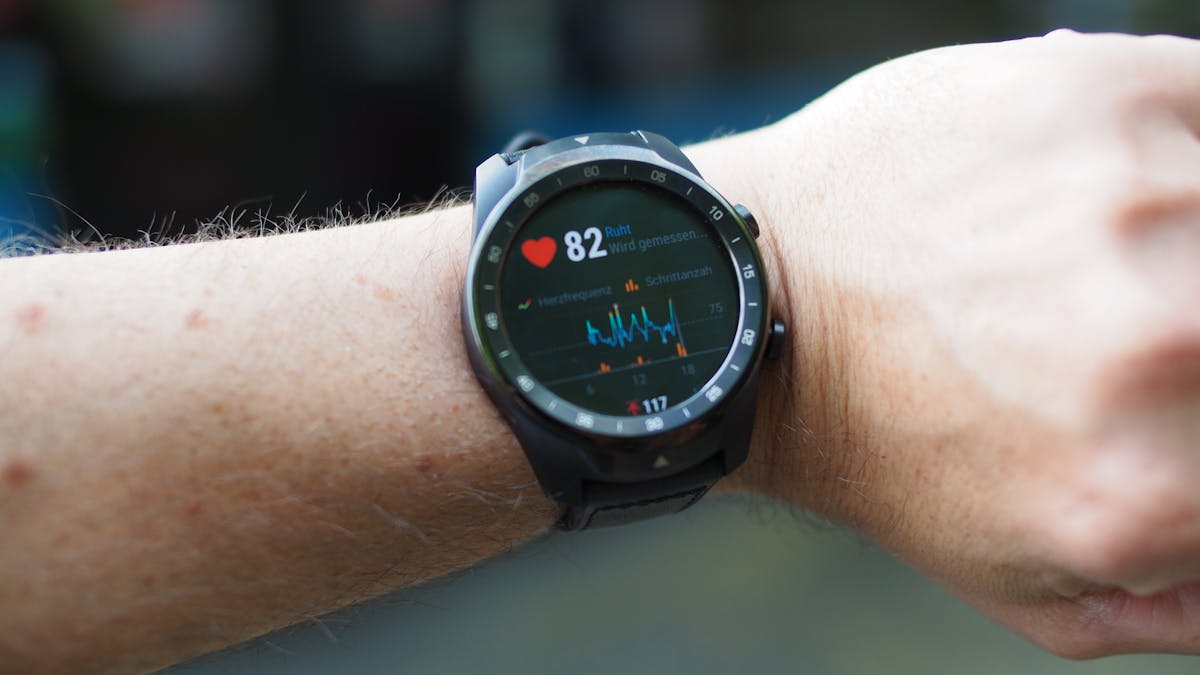
In a sport increasingly dominated by GPS watches, power meters, heart rate monitors, and data dashboards, the most powerful training tool you have costs nothing and weighs nothing. It's your own perception of effort.
Rate of Perceived Exertion, or RPE, is a subjective scale that asks a simple question: how hard does this feel? That's it. No technology required. And yet, decades of research have shown that RPE is a remarkably accurate proxy for physiological intensity, one that sometimes outperforms objective metrics like heart rate in detecting overtraining and guiding adaptation.
What RPE Is (and Where It Came From)
The concept of perceived exertion was formalized by Swedish psychologist Gunnar Borg in the 1960s. His original scale ran from 6 to 20 (designed to roughly correspond to heart rates from 60 to 200 bpm). Later, he developed the simpler CR-10 scale, which runs from 0 to 10 and is more intuitive for most athletes.
For runners, the CR-10 scale is the standard. After each workout (or during, for interval sessions), you rate the overall effort on a scale from 0 (rest) to 10 (maximal, can't-continue effort). The number captures something no device can: the integrated experience of physical stress, including muscular fatigue, breathing difficulty, mental strain, and accumulated tiredness from previous days.
The RPE Scale for Runners
Why RPE Often Beats Heart Rate
Heart rate is an excellent physiological marker, but it has blind spots that RPE doesn't. Here's why researchers like Carl Foster, who pioneered the session-RPE method for monitoring training load, advocate using RPE as a primary metric:
- Heart rate lags behind effort. When you start a tempo run, your perceived effort jumps to the right level almost immediately. Your heart rate takes 1-3 minutes to catch up. For interval training, where efforts last 2-5 minutes, heart rate never fully reaches steady state. RPE is instant.
- Heart rate drifts with fatigue. Cardiac drift, the gradual rise in heart rate during prolonged exercise at constant pace, can make an easy long run look like a tempo session on your heart rate graph. RPE accounts for this because it captures how the effort feels, not just what your cardiovascular system is doing.
- Heart rate is affected by external factors. Caffeine, heat, altitude, dehydration, sleep quality, stress: all of these can raise heart rate independently of exercise intensity. A heart rate of 155 bpm might be easy effort on a cool, rested morning and threshold effort on a hot, sleep-deprived afternoon. RPE automatically adjusts for all of these because it measures the integrated experience, not a single physiological variable.
- RPE catches overtraining before heart rate does. One of the earliest signs of overreaching is that easy runs start feeling harder than they should. You might report an RPE of 5 for a run that would normally be a 3. Your heart rate may still look normal at this point. RPE picks up the signal days or even weeks before heart rate variability or resting heart rate show a red flag.
Session-RPE: Measuring Training Load Without a Watch
Carl Foster's session-RPE method, published in a landmark 2001 paper, provides a simple way to quantify training load using nothing but your perceived effort and a clock:
Training Load = Session RPE × Duration (minutes)
A 60-minute easy run at RPE 3 produces a load of 180. A 45-minute tempo run at RPE 7 produces a load of 315. A 30-minute interval session at RPE 8 produces a load of 240. By tracking weekly totals, you can monitor whether your training load is increasing at a safe rate, typically no more than 10-15% per week.
Foster's research showed that session-RPE correlates with heart-rate-based training load calculations at r = 0.88-0.92, which is remarkably high for a completely subjective measure. It's accurate enough to guide professional athletes and simple enough to use with a pen and paper.
How to Calibrate Your RPE
The most common concern about RPE is subjectivity. How do you know if your 6 is the same as someone else's 6? The honest answer: it doesn't matter. RPE is a personal metric. What matters is that your own scale is internally consistent over time.
Here are practical tips for developing a reliable internal RPE:
- Use anchor points. Your two most reliable references are a 3 (easy conversational run) and an 8-9 (hard interval that you can't sustain for more than a few minutes). Fix those two points and everything else falls into place relative to them.
- Rate 30 minutes after finishing. Foster recommends waiting about 30 minutes post-workout before assigning a session RPE. This avoids the "recency effect" where the last few minutes of a run (whether they were hard or easy) disproportionately color your perception of the entire session.
- Be honest, not heroic. There's no benefit to under-reporting your RPE. If an easy run felt like a 5 today, report it as a 5. That information is valuable: it might mean you're fatigued, under-recovered, or fighting off illness. Tough-guying your RPE only hides useful signals.
- Track trends, not individual numbers. A single RPE reading is a data point. The real value comes from patterns over weeks: is your easy-run RPE creeping up? Are hard sessions feeling harder than they should? Those trends tell you whether your training is on track or whether you need to adjust.
- Cross-reference with pace occasionally. If your easy run RPE is a consistent 3 at 5:50/km, and then one week it's a 3 at 5:40/km, you're getting fitter. If it's a 5 at 5:50/km, you're accumulating fatigue. RPE plus pace is a powerful combination.
How Snel Uses RPE
In Snel, RPE is a first-class training signal. After every workout, you log a simple RPE score. The app uses this data to power its adaptation engine:
- Fatigue detection: Three or more consecutive days with RPE at 8 or above triggers a volume reduction of 15% for the following week. This prevents overreaching before it becomes overtraining.
- Under-training detection: If your RPE consistently sits below 4 for two or more weeks, the plan suggests increasing difficulty. You're leaving fitness on the table.
- Load monitoring: Session-RPE feeds directly into weekly load calculations. If your week-over-week load jumps more than 10%, the plan caps the increase to keep you in a safe progression range.
- Recovery validation: After recovery weeks, your RPE on standard efforts should drop. If it doesn't, the plan may extend the recovery period or reduce the following week's load.
The beauty of RPE-based adaptation is that it requires no additional hardware. You don't need a heart rate monitor, a power meter, or a premium watch. RPE works on any device. You just need to pay attention to how you feel, and report it honestly. Snel takes care of the rest.
The Bottom Line
RPE is not a replacement for pace, heart rate, or other objective metrics. It's a complement to them, and in many situations, a superior one. It's available on every run, in every condition, with zero equipment. It captures the full picture of physiological stress in a single number. And it connects you to your body in a way that staring at a watch screen never can.
Start using it today. After your next run, ask yourself: on a scale of 1 to 10, how hard was that? Write it down. Do it again tomorrow. Within a few weeks, you'll have a training diary that tells you more about your fitness trajectory than any gadget on the market.