Here is a scenario that plays out at every running club in the world. A runner finishes an easy recovery day at 5:15/km and feels great about it. Their training plan said 5:45-6:00/km, but they felt good, so they pushed it. What's the harm in going a little faster?
The harm, it turns out, is enormous. Running your easy runs too fast is the most common training mistake in distance running, and it quietly sabotages everything from your aerobic development to your ability to hit the hard sessions that actually make you faster.
The 80/20 Principle: What Elite Runners Know
In the early 2000s, Norwegian exercise physiologist Stephen Seiler began studying the training distributions of elite endurance athletes across sports: runners, cyclists, cross-country skiers, rowers. His findings were remarkably consistent. Regardless of the sport, the best endurance athletes in the world spend roughly 80% of their training time at low intensity, and only about 20% at moderate-to-high intensity.
This wasn't a coaching philosophy imposed from above. It was an emergent pattern, discovered independently by athletes and coaches across decades and continents. Seiler called it the polarized training model, and subsequent research has confirmed it works better than threshold-heavy or moderate-intensity approaches for the vast majority of runners.
The key insight: that 80% of easy running isn't junk mileage. It is the foundation that makes the 20% of hard work possible and productive.
What the Research Says
A 2014 study by Stoggl and Sperlich compared polarized training (lots of easy + some very hard) against threshold training (mostly moderate) in trained endurance athletes. After nine weeks, the polarized group improved VO2max by +11.7% compared to +5.6% for the threshold group. The polarized group also showed greater improvements in time to exhaustion and peak power output.
Why Easy Running Builds Your Engine
When you run at a truly easy pace, something remarkable happens inside your body. Your muscles preferentially burn fat for fuel, which trains your aerobic system to be more efficient. Your heart fills more completely between beats, strengthening the cardiac muscle and increasing stroke volume over time. Your body builds new capillaries around muscle fibers, improving oxygen delivery. And your mitochondria, the powerhouses of your cells, multiply and grow.
All of these adaptations happen best in the easy zone. Push the pace into the moderate zone, that grey area between easy and hard, and you shift the physiological stimulus. You burn more glycogen instead of fat. Your heart rate rises enough to cause fatigue without being high enough to trigger the VO2max adaptations you'd get from true interval work. You end up in no-man's land: too hard to recover from, too easy to produce the sharp fitness gains of quality sessions.
Jack Daniels, the legendary exercise physiologist whose VO2max system underpins Snel's training zones, puts it simply: "Easy running does more good than most runners realize, and they can't do enough of it if they insist on running it too fast."
Signs You're Running Too Fast on Easy Days
How do you know if you're guilty? Here are the telltale signs:
- The conversation test fails. If you can't comfortably hold a full conversation, complete sentences, no gasping, you're going too fast. This is the oldest and most reliable easy-pace test in running.
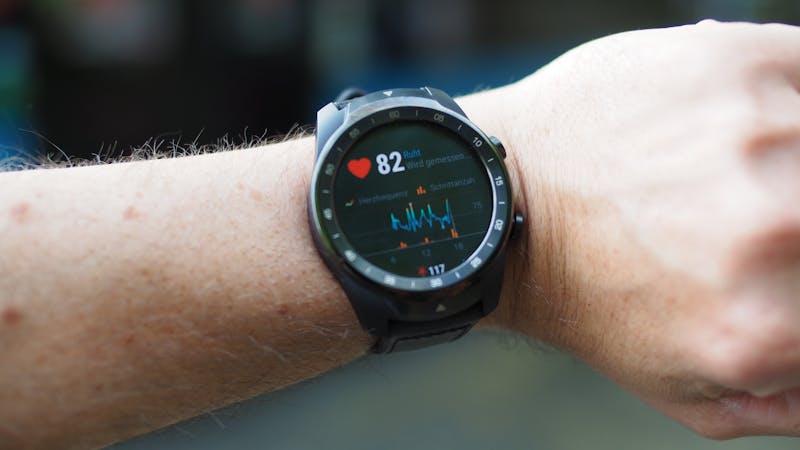
- Your heart rate is above 75% of max. Easy runs should sit around 60-75% of your maximum heart rate. If you're consistently above that, you're drifting into moderate territory.
- You feel tired the next day. An easy run should leave you feeling the same or better than before you started. If you need extra recovery after "easy" days, they weren't easy.
- Your hard days suffer. This is the big one. If your interval sessions and tempo runs feel flat, the most likely culprit is that your easy days are stealing your freshness.
- Every run feels the same effort. If you run most of your kilometres at the same moderate intensity, you've fallen into the classic trap. Your training should have clear valleys (easy) and peaks (hard), not a plateau.
The Easy Pace Self-Test
Try This on Your Next Run
- Warm up for 10 minutes at whatever pace feels natural.
- Slow down until you can comfortably recite the alphabet out loud without pausing for breath.
- Note your pace. This is your true easy pace. For most runners, it is 30-90 seconds per kilometer slower than they typically run on "easy" days.
- Run the remainder of your session at this pace. Notice how it feels: controlled, relaxed, almost too slow.
- The next day, pay attention. You should feel fresh and ready for a harder workout.
If your current easy pace is significantly faster than what this test reveals, don't panic. You've just found a major opportunity to improve. By simply slowing down your easy days, you'll recover better, run more consistently, and unlock the ability to go truly hard on the days that matter.
How VO2max Zones Solve This Problem
The reason so many runners go too fast on easy days is that they're guessing. Without objective, personalised pace targets, most people default to running by feel, and "feel" is a notoriously unreliable guide on easy days. A pace that feels easy when you're fresh on a cool morning is moderate-intensity work when you're tired, warm, or stressed.
This is exactly why Snel uses the VO2max system (VO2max estimate) developed by Jack Daniels. When you enter a recent race result or time trial, the app calculates your VO2max score and generates five precise training zones, including an easy zone with specific pace targets. Your easy pace isn't a guess. It's a number, derived from your demonstrated fitness, calibrated to deliver the right physiological stimulus.
For a runner with a VO2max of 45 (roughly a 22:00 5K or 45:30 10K), the easy zone is 5:34-6:07/km. Not 5:00. Not "whatever feels comfortable." A specific range, backed by decades of research and thousands of coached athletes.
And because Snel adapts your plan based on your feedback and performance, your zones evolve with you. Crush a B-race? Your VO2max recalibrates upward, and your easy pace adjusts accordingly. No guesswork required.
The Ego Problem
Let's be honest about the real barrier here. Running slow feels wrong. It feels like you're not working hard enough, not earning your improvement. When you pass other runners or check your GPS and see a slower-than-usual number, something in your brain protests.
This is an ego problem, not a training problem. The best runners in the world, people who can run sub-2:10 marathons, do their easy runs at paces that many recreational runners would consider slow. Eliud Kipchoge's easy runs are reportedly around 5:30-6:00/km. If the greatest marathoner in history is comfortable running that pace on easy days, you can be too.
The mantra is simple: easy days easy, hard days hard. The gap between them is where the magic happens. Narrow that gap, and you end up running every day at the same mediocre intensity, never recovering, never truly pushing. Widen it, and you unlock the full potential of polarized training.
The Bottom Line
If you take one thing from this article, let it be this: your easy pace should feel almost embarrassingly slow. If you're not occasionally thinking "this can't possibly be doing anything," you're probably still going too fast.
Trust the process. Trust the science. Slow down to speed up. Your next PR is hiding inside the runs you're currently doing too fast.